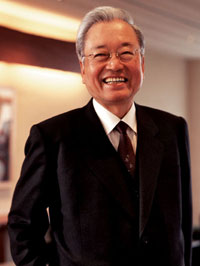
Minoru Mori was not just a real estate developer; he was a titan of urban planning, a visionary who reshaped the skylines of Tokyo and beyond. His name is synonymous with some of Japan's most iconic and ambitious projects, including Roppongi Hills, Ark Hills, and Toranomon Hills. But behind the grandeur of these colossal developments lies a fundamental question that often fascinates admirers and critics alike: minoru mori net worth. How rich was this man whose audacity and foresight transformed vast swathes of metropolitan land into vibrant, integrated "cities within cities"? Pinpointing an exact figure for a private individual, especially one who passed away, can be complex, but we can delve into the sources of his immense wealth and the estimates that circulated during his lifetime and after his death.
Minoru Mori: A Visionary Architect of Urban Landscapes
Born in 1934, Minoru Mori inherited not just a business from his father, Taikichiro Mori, but also a philosophy of urban development centered on long-term value and community building. Taikichiro Mori founded Mori Building Company in 1959, and Minoru, alongside his brother Akira, took the reins, transforming it into a global powerhouse. Minoru’s vision extended far beyond mere construction; he envisioned integrated urban ecosystems where people could live, work, shop, and relax without leaving the complex. This "Vertical Garden City" concept was revolutionary, challenging traditional notions of urban sprawl and promoting high-density, mixed-use developments.
His projects were characterized by meticulous planning, cutting-edge architecture, and a profound understanding of urban psychology. He wasn't just building towers; he was crafting environments designed to foster creativity, productivity, and a high quality of life. This ambitious approach, while costly and time-consuming, laid the groundwork for the extraordinary value creation that defined his career and ultimately contributed to minoru mori net worth.
Unpacking the Mori Building Empire: The Foundation of His Wealth
The core of Minoru Mori's wealth lay in his substantial ownership and leadership of the Mori Building Company. Unlike many developers who build and sell, Mori Building adopted a unique strategy of developing, owning, and managing its properties for the long term. This approach meant that the company, and by extension its principal owner, retained the immense value appreciating over decades from prime real estate in one of the world's most dynamic cities.
- Roppongi Hills: Perhaps his most famous project, Roppongi Hills, completed in 2003, is a prime example of his "city within a city" concept. Spanning 27 acres, it features offices, apartments, shops, restaurants, a hotel, a major art museum, and lush public spaces. Its long-term ownership model ensures a continuous stream of rental income and property value appreciation.
- Ark Hills: An earlier project completed in 1986, Ark Hills was one of the first integrated developments in Tokyo, combining office space, residential units, a concert hall, and a hotel. It set the precedent for future Mori projects.
- Toranomon Hills: Inaugurated after his death, Toranomon Hills further exemplified his vision, featuring a skyscraper with offices, residences, a hotel, and transport infrastructure.
- Shanghai World Financial Center: Mori's influence extended internationally, with the Shanghai World Financial Center becoming a landmark in China.
This strategy of developing and holding valuable assets in prime locations meant that the Mori Building Company accumulated an incredible portfolio of high-value real estate. The significant equity stake Minoru Mori held in this private company was the direct source of his estimated personal wealth. For a deeper dive into the specifics of this massive undertaking, you can read more about Minoru Mori's Net Worth: Unpacking a Real Estate Empire.
Estimating Minoru Mori's Net Worth: A Complex Calculation
Estimating the exact net worth of individuals who own private companies, especially those with vast real estate holdings, is notoriously challenging. Public figures like stock market billionaires have transparent valuations, but for private magnates, estimates rely on valuing their company's assets, deducting liabilities, and then attributing a share based on ownership percentage.
Key Factors Contributing to His Valuation
Financial publications like Forbes and Bloomberg frequently estimated Minoru Mori's wealth during his lifetime. These estimations typically considered several factors:
- Equity in Mori Building Co.: As the chairman and controlling shareholder of Mori Building, the value of his stake in the company formed the vast majority of his personal fortune.
- Value of Real Estate Assets: The company's portfolio of developed and managed properties, including landmark skyscrapers, luxury residences, commercial spaces, and retail complexes, was valued in the billions.
- Rental Income and Management Fees: The substantial recurring revenue generated from rents and property management contributed to the company's profitability and intrinsic value.
- Brand Value and Strategic Vision: The Mori brand itself commanded significant prestige and trust, reflecting its innovative approach to urban development and its long-term strategic vision.
At the time of his passing in 2012, Minoru Mori was consistently ranked among the wealthiest individuals in Japan and the world. Forbes, for instance, estimated his net worth to be approximately $5 billion in March 2012, just weeks before his death. This figure solidified his position as one of the world's leading real estate billionaires.
It's important to note that such figures are estimates and can fluctuate with market conditions, property valuations, and currency exchange rates. However, the consistent placement of Minoru Mori on these lists underscored the immense scale of his financial success. For more specific details on the final estimations, explore What Was Minoru Mori's Net Worth at the Time of His Death?
More Than Just Billions: Mori's Enduring Legacy and Impact
While the figures behind minoru mori net worth are undoubtedly impressive, his true legacy extends far beyond monetary value. He didn't just accumulate wealth; he used it as a tool to realize a profound vision for urban living. His projects are living testaments to his philosophy, offering practical lessons for contemporary urban planners and developers:
- Integrated Development: Mori emphasized mixed-use, self-contained communities that reduce commuting times and foster a stronger sense of place. This approach is highly relevant in an age of increased environmental awareness and the desire for walkable cities.
- Long-Term Vision: By retaining ownership and management, Mori Building prioritized sustainable growth and quality over quick returns. This long-term perspective allowed for meticulous planning and investment in public spaces, art, and infrastructure that truly enriched the urban experience.
- Public Spaces as Core Assets: Mori understood that attractive public squares, parks, and cultural facilities were not just amenities but vital components that increased property value and quality of life. Roppongi Hills, with its extensive public art and green spaces, is a prime example.
- Resilience and Disaster Preparedness: Given Japan's seismic activity, Mori's buildings incorporated advanced earthquake-resistant technology, setting new standards for urban safety and resilience.
His impact on Tokyo's urban landscape is undeniable. He transformed neglected areas into vibrant, sought-after destinations, drawing in residents, businesses, and tourists alike. His concept of the "Vertical Garden City" continues to influence urban planning discourse globally, offering a sustainable model for high-density living without sacrificing green spaces or quality of life.
Conclusion
Minoru Mori was a titan of real estate, whose relentless pursuit of a utopian urban vision translated into a colossal financial empire. While the precise figure for minoru mori net worth remained an estimate, consistently placing him among the world's multi-billionaires, it was a direct reflection of the immense value created by Mori Building Company's innovative and long-term approach to urban development. His projects, far from being mere buildings, were complex ecosystems designed for human flourishing. His wealth was a testament to his extraordinary foresight and unwavering commitment to his vision, leaving an indelible mark on Tokyo's skyline and a lasting legacy in the annals of urban planning.
