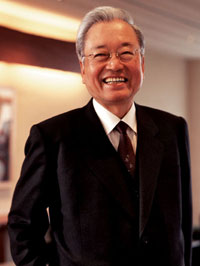
The Visionary Who Reshaped Tokyo: Unpacking Minoru Mori's Financial Legacy
Minoru Mori was not just a real estate developer; he was an urban visionary whose audacious projects fundamentally reshaped the skyline and lifestyle of Tokyo. As the driving force behind Mori Building Co., Ltd., he transformed neglected urban pockets into vibrant "vertical garden cities," integrating residential, commercial, cultural, and green spaces into cohesive, high-rise developments. Given the monumental scale of his endeavors, questions naturally arise about the financial magnitude of the man behind these architectural marvels. Specifically, understanding Minoru Mori's net worth at the time of his death offers a glimpse into the vast economic impact and personal wealth generated by his singular vision.
Pinpointing an exact net worth for a private individual of Minoru Mori's stature can be challenging, as the full extent of personal assets, liabilities, and private company valuations are rarely disclosed publicly. However, through careful analysis of his company's portfolio, publicly available financial statements, and reputable wealth tracking publications, we can arrive at a well-informed estimate.
Mori Building: The Cornerstone of Minoru Mori's Wealth
At the heart of Minoru Mori's financial empire was Mori Building Co., Ltd., a private real estate developer founded by his father, Taikichiro Mori. Minoru, along with his brother Akira, expanded the company into one of Japan's most influential and innovative property firms. Unlike traditional developers who might focus on single-purpose buildings, Mori Building championed the concept of integrated urban complexes designed to foster community, reduce commutes, and enhance quality of life.
Key to understanding Minoru Mori's net worth is grasping the sheer scale and value of Mori Building's portfolio. The company owns and operates some of Tokyo's most iconic landmarks, including:
- Roppongi Hills: A sprawling complex completed in 2003, featuring offices, apartments, shops, restaurants, a hotel, an art museum, and green spaces. It became a model for future urban development.
- Ark Hills: An earlier pioneering integrated development from the 1980s, combining office towers, residential buildings, a hotel, and a concert hall.
- Atago Green Hills: Another large-scale complex featuring residential towers, offices, and temples.
- Omotesando Hills: A unique shopping complex built into a sloping site in one of Tokyo's most fashionable districts.
- Shanghai World Financial Center: A towering skyscraper in Shanghai, representing Mori Building's significant international expansion.
These projects represent multi-billion-dollar investments, generating substantial rental income and appreciating in value over decades. Minoru Mori, as the chairman and primary visionary, held a significant stake in this privately held company. The valuation of Mori Building, therefore, directly correlated with his personal wealth.
For a deeper dive into how such an extensive portfolio translated into individual wealth, you might find our article
Minoru Mori's Net Worth: Unpacking a Real Estate Empire particularly insightful, as it details the intricate financial mechanisms at play.
The Value Proposition of "Vertical Garden Cities"
The philosophy behind Mori Building's projects was not just about erecting tall buildings, but about creating self-contained, sustainable urban ecosystems. This approach, often referred to as "Vertical Garden Cities," allowed them to command premium rents and property values. By integrating diverse functions, they created magnets for businesses, residents, and tourists, ensuring long-term profitability and asset appreciation. This strategic vision played a crucial role in building the immense value attributed to Minoru Mori's personal wealth.
The Nuances of Valuing a Private Real Estate Mogul's Wealth
Estimating the net worth of an individual like Minoru Mori, whose primary assets are tied to a privately owned company with extensive real estate holdings, comes with inherent complexities. Unlike publicly traded companies where stock prices provide daily valuations, private entities require comprehensive appraisals.
Here are some factors that influence such estimates:
- Asset Valuation: Real estate values fluctuate based on market conditions, location, demand, and economic cycles. The valuation of a portfolio like Mori Building's involves assessing hundreds of properties.
- Debt and Liabilities: Large-scale real estate development often involves significant borrowing. A true net worth calculation must factor in the company's and the individual's debts.
- Ownership Structure: As a private company, the exact percentage of Minoru Mori's ownership stake (versus family trusts, other shareholders, etc.) might not be fully transparent.
- Illiquid Assets: A significant portion of Minoru Mori's wealth was tied up in physical properties and the company itself, making it largely illiquid. This means the reported net worth isn't necessarily cash on hand.
- Exchange Rates: For international wealth rankings, exchange rate fluctuations between the Japanese Yen and the US Dollar can impact the reported dollar figure.
Reputable financial publications like Forbes and Bloomberg undertake extensive research to estimate the wealth of billionaires worldwide. They often consult property records, industry experts, and public filings to make their best judgments.
For more on the methodologies used to calculate the wealth of titans like Mori, our companion piece
Minoru Mori Net Worth Revealed: How Rich Was He? provides additional context.
Minoru Mori's Estimated Net Worth at the Time of His Death
Minoru Mori passed away on March 8, 2012, at the age of 77. Shortly before his death, in its 2012 Billionaires List, Forbes magazine estimated Minoru Mori's net worth to be approximately
$6.8 billion (USD).
This figure placed him among the wealthiest individuals in Japan and globally, underscoring the extraordinary financial success of his real estate ventures. It's important to reiterate that this was an estimate based on the available information at the time, primarily reflecting his controlling stake in Mori Building Co., Ltd., its vast portfolio of high-value properties, and any other known personal assets, minus estimated liabilities.
This estimated net worth was a testament to his decades of strategic vision, meticulous execution, and unwavering belief in his urban development philosophy. His ability to anticipate future urban needs and create integrated communities that served both economic and social functions was unparalleled, leading to immense value creation.
A Lasting Legacy Beyond Billions
While Minoru Mori's net worth at the time of his death was undeniably colossal, his legacy extends far beyond financial figures. He was a pioneer who challenged conventional wisdom about urban planning and inspired generations of architects, developers, and city planners.
His contributions include:
- Redefining Urban Living: He showed that high-density living could be both comfortable and luxurious, reducing urban sprawl and promoting community interaction.
- Cultural Integration: Projects like Roppongi Hills seamlessly integrated cultural facilities, such as the Mori Art Museum and Tokyo City View, making art and culture accessible to a broader public.
- Environmental Consciousness: Mori Building often incorporated extensive green spaces and sustainable design principles into its projects, long before it became a mainstream trend.
- Economic Impact: His developments revitalized entire districts, attracting businesses, tourists, and residents, thereby generating significant economic activity and employment.
Minoru Mori's vision helped transform Tokyo into one of the world's most dynamic and livable megacities. His meticulous attention to detail, from master planning down to the selection of public art, ensured that his projects were not merely buildings but living, breathing urban centers. His enduring influence can still be seen in the vibrant communities and innovative design elements that define Tokyo's modern landscape.
In conclusion, Minoru Mori's net worth of approximately $6.8 billion (USD) at the time of his death in 2012 firmly established him as a global real estate titan. However, his true measure of success lies in the enduring "vertical garden cities" he bequeathed to Tokyo and the world, proving that intelligent, integrated urban development can create immense value, both financial and societal. His life's work continues to inspire and serves as a powerful testament to the transformative power of architectural vision and entrepreneurial drive.